With online shopping becoming ever more prevalent, countless households find themselves inundated with cardboard delivery boxes. Rather than simply tossing them into the recycling bin straightaway, there exists a wealth of opportunities to breathe new life into these humble containers. From ingenious storage hacks to environmentally conscious disposal methods, the humble Amazon box can serve purposes far beyond its initial delivery duty, all whilst reducing waste and embracing a more sustainable lifestyle.
Clever diy storage projects using amazon cardboard boxes
The versatility of sturdy cardboard makes it an ideal candidate for crafting bespoke storage solutions tailored to your exact needs. With a little creativity and minimal supplies, these boxes can be transformed into practical organisers that rival shop-bought alternatives. The beauty of these projects lies in their accessibility; anyone can fashion functional items without requiring advanced crafting skills or expensive materials.
Transform Delivery Boxes into Wardrobe Organisers and Drawer Dividers
One of the most effective uses for these boxes involves creating custom dividers for wardrobes and drawers. By cutting cardboard to precise dimensions, you can fashion compartments that keep socks, undergarments, and accessories neatly separated. The process begins with measuring the interior of your drawer, then cutting the cardboard to create interlocking panels that slot together to form a grid pattern. For added durability and aesthetic appeal, consider covering the dividers with decorative fabric or wrapping them with washi tape, which not only reinforces the structure but also adds a splash of colour to otherwise utilitarian storage. These bespoke organisers prove particularly useful in children's rooms, where smaller items tend to become jumbled together, and the customisable nature means they can be adjusted as needs change over time.
Create Custom Desktop Storage and Filing Systems from Packaging Materials
The home office presents another excellent opportunity for cardboard upcycling. Desktop clutter can be tamed by fashioning magazine holders, document trays, and even drawer organisers from boxes of various sizes. To create a simple yet effective filing system, cut boxes at an angle to form magazine holders that can store paperwork, notebooks, or even craft supplies. Smaller boxes can be cut down and arranged within larger containers to create compartmentalised storage for stationery items such as pens, paper clips, and sticky notes. The addition of decorative paper or paint transforms these practical items into attractive desk accessories that complement your workspace décor. For those who appreciate a cohesive aesthetic, covering multiple organisers in matching materials creates a unified look that belies their humble origins as shipping materials.
Proper Recycling Methods for Amazon Packaging and Cardboard
Whilst creative reuse offers numerous benefits, not every box will find a second purpose in your home. Understanding the correct recycling procedures ensures that these materials re-enter the circular economy efficiently, minimising environmental impact and supporting sustainability initiatives. Proper preparation of cardboard for recycling maximises its potential for transformation into new products.
Breaking Down and Preparing Boxes for Kerbside Collection
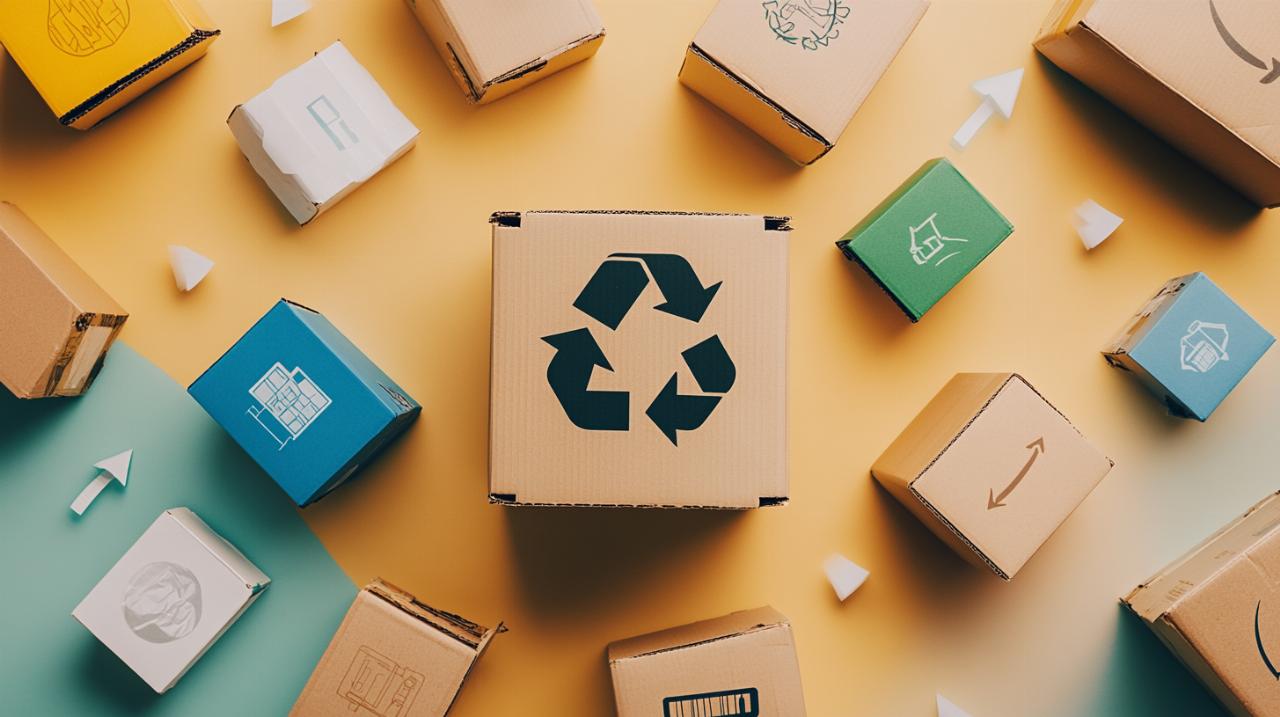
Preparing boxes for kerbside collection requires attention to detail to ensure they are processed correctly. The first step involves flattening the boxes completely, which not only saves space in your recycling bin but also facilitates easier handling at sorting facilities. To flatten a box effectively, locate the taped seams and carefully open them, then fold the cardboard flat along its original creases. This simple act significantly increases the volume of material that can be collected in a single journey, reducing the carbon footprint associated with collection services. It is essential to remove all packaging tape, shipping labels, and any plastic components before placing the cardboard in your recycling bin. Many local authorities request that cardboard be kept dry, as wet cardboard can contaminate entire batches during the recycling process, rendering them unsuitable for reprocessing.
Understanding which amazon packaging materials can be recycled
Not all components of an Amazon delivery are created equal when it comes to recyclability. The brown cardboard boxes themselves are universally accepted in recycling programmes, but other elements require careful consideration. Bubble wrap and air pillows, whilst protective during transit, cannot typically be placed in standard household recycling bins. These plastic materials often require separate collection points, commonly found at larger supermarkets. Similarly, the plastic envelopes sometimes used for smaller items need to be disposed of through specialist recycling streams. Paper packaging, including brown paper and paper-based padding, can usually be recycled alongside cardboard, provided it is free from excessive contamination. By taking the time to separate these various materials correctly, you ensure that the maximum amount of packaging finds its way back into productive use rather than ending up in landfill sites.
Sustainable Alternatives and Eco-Friendly Uses for Amazon Delivery Materials
Beyond traditional recycling and home organisation projects, numerous alternative pathways exist for extending the useful life of delivery materials. These approaches not only reduce waste but also support community initiatives and environmental stewardship, demonstrating that sustainability extends beyond individual actions to encompass broader social responsibility.
Donating Sturdy Boxes to Local Moving Companies and Charities
Boxes in excellent condition possess significant value to individuals and organisations engaged in moving, shipping, or charitable distribution. Local charities often welcome donations of sturdy cardboard boxes, which they use to package items for redistribution to those in need. Moving companies and removal services also appreciate access to free boxes, which helps reduce their operational costs. Additionally, community groups organising jumble sales, car boot sales, or fundraising events find these boxes invaluable for transporting goods. The Give Back Box initiative represents an innovative approach to charitable donation, allowing people to fill boxes with unwanted items and ship them to various charities using a prepaid shipping label. This programme exemplifies how packaging materials can facilitate social good whilst simultaneously diverting items from landfill. Before donating boxes, ensure they remain clean, dry, and structurally sound, as damaged boxes offer little utility to potential recipients.
Composting Cardboard and Creating Garden Mulch from Packaging
Gardeners have long recognised the value of cardboard as a natural weed suppressant and soil improver. Laying flattened boxes between garden rows creates an effective barrier that prevents weed growth whilst gradually decomposing to enrich the soil. This method proves particularly effective in vegetable gardens, where it can be covered with wood chips or straw for a more attractive appearance. When composting cardboard, tear or shred it into smaller pieces to accelerate decomposition, and ensure it is free from glossy coatings or excessive ink, which may contain undesirable chemicals. The carbon-rich nature of cardboard makes it an excellent brown material for compost heaps, helping to balance the nitrogen-rich green materials such as grass clippings and vegetable scraps. Over time, the cardboard breaks down completely, contributing to the creation of nutrient-rich compost that enhances soil structure and fertility. This natural approach to disposal aligns perfectly with principles of sustainability and waste reduction, demonstrating that even the simplest materials can play a vital role in supporting environmental health.